Root canal treatment, also known as endodontic treatment, is designed to save a tooth when the soft tissue inside it, known as the dental pulp, becomes infected or inflamed. This can happen due to deep decay, cracks, trauma or repeated dental treatment. Root canal treatment removes the affected tissue, cleans the inside of the tooth and seals it to help prevent further infection.
At Regency House Dental Clinic in St Albans, we take a careful approach to root canal treatment, focusing on your comfort and long-term oral health. Our team will assess your tooth, explain the recommended treatment and guide you through each stage, helping you understand your options for preserving your natural tooth.
Root canal treatment can help preserve a damaged or infected tooth, avoiding extraction where possible.
Treating the source of infection or inflammation can help reduce toothache and discomfort.
Removing infected pulp and sealing the tooth helps prevent bacteria from entering the root canal system again.
After treatment and suitable restoration, the tooth can function normally, allowing you to eat and speak comfortably.
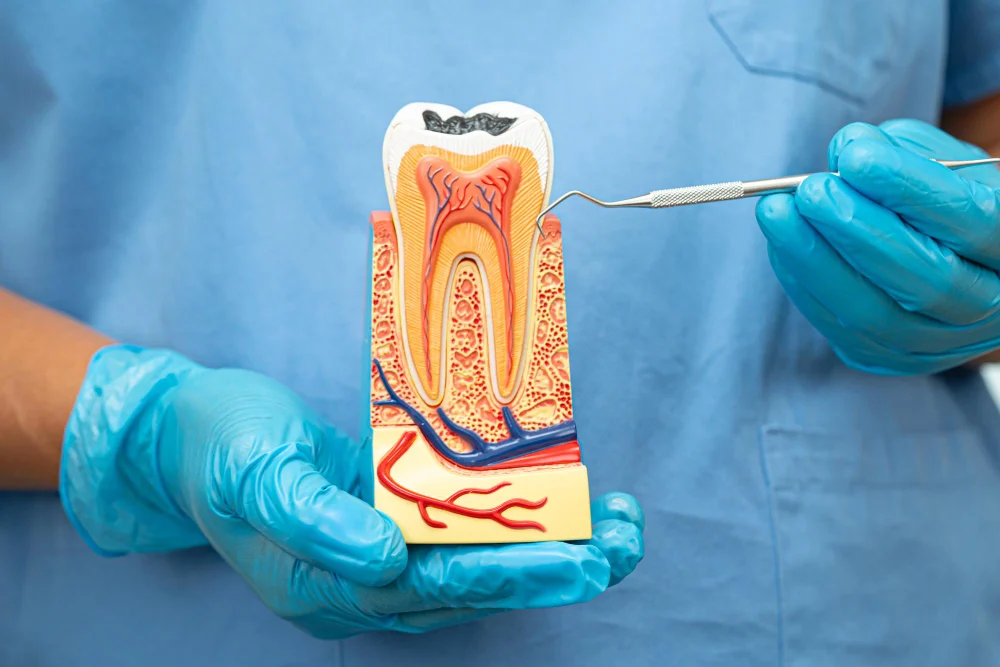
Root canal treatment removes infected or inflamed pulp from inside a tooth. The canals are cleaned, shaped and sealed to help preserve the natural tooth.
Root canal treatment may be needed when the pulp becomes infected or inflamed due to deep decay, cracks, trauma or repeated dental procedures.
Treatment is performed under local anaesthetic to keep you comfortable. Some tenderness may occur after the procedure, but treatment aims to address the source of dental pain.
Treatment duration depends on the tooth, the complexity of its root canals and the extent of infection. Some cases require more than one appointment.
In many cases, root canal treatment can preserve a tooth that might otherwise require extraction. Your dentist will assess whether the tooth can be successfully restored.
Some teeth, particularly those with significant structural damage, may benefit from a crown or another protective restoration. Your dentist will recommend the most suitable option.
If an infected or inflamed pulp is left untreated, the problem may worsen and lead to pain, an abscess or damage to surrounding tissues. Your dentist will discuss the appropriate treatment options.
A successfully treated and properly restored tooth can last for many years. Its longevity depends on factors such as the quality of the restoration, oral hygiene and general dental care.
Your dentist will advise you about eating after treatment. You may need to avoid chewing hard foods on the treated tooth until the final restoration is completed.
Call us on 01727 848080 or click the Book Online Button on the top of the page to arrange an appointment.